Fish Iowa - Fish Species - Common Shiner
Characteristics
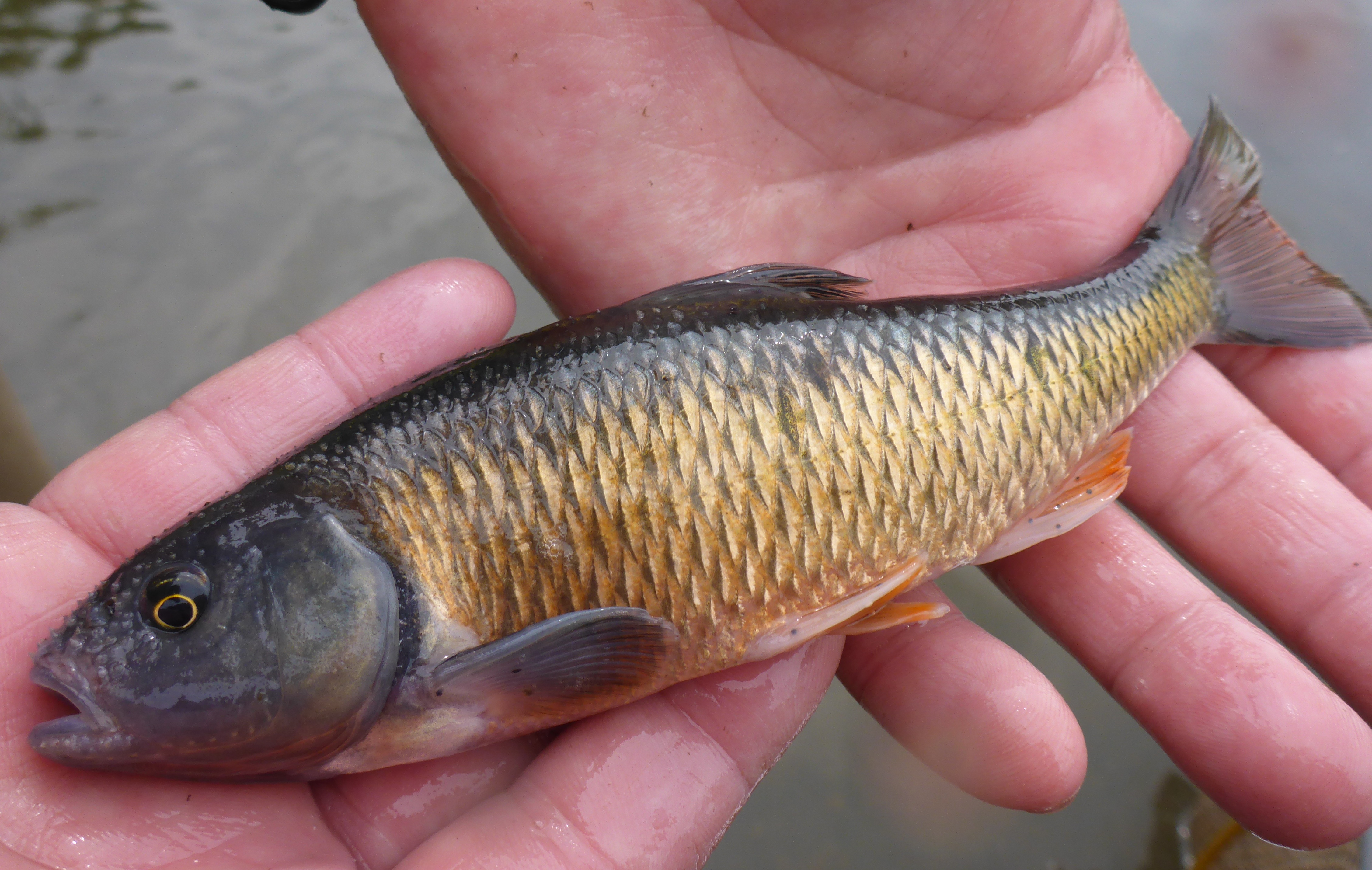
This cyprinid is robust with a stout body and is moderately compressed laterally. The body is olive-green with bluish reflections on the back and the sides, and the belly is silvery. Breeding males are tinted with pink over their whole body and have dusky dorsal and caudal fins. Common shiners are one of a few minnow species with dark pigmentation behind scattered scales, looking like some scales have been lost. The scales along the sides are elevated and appear diamond-shaped. A broad mid-dorsal stripe, along the top of the back, is subtended by 2 or 3 narrow, parallel stripes and is best seen by viewing the fish from above. The dorsal and pelvic fins have 8 rays, while the pectoral fins have 15 to 17, and the anal fin usually has 9 rays. A large, terminal mouth is nearly horizontal and has no barbel. Strongly hooked pharyngeal teeth on sturdy arches are arranged in a 2, 4-4, 2 formula.
Foods
- No results found
Expert Tip
One of the most common baitfish, and one of the most collected fish in stream and lake surveys. This makes it one of the most likely fish for bigger fish to eat, so having baits that look like Common Shiners is a great idea.
Details
The Common Shiner lives in high-gradient streams of medium-size with moderate to swift current, clear, cool, weedless water, bottoms of gravel, rubble and bedrock. It is found in the pools of streams where riffles and pools alternate in rapid succession. As flow decreases late into summer, streams of this type are reduced to a series of isolated pools, but water continues to seep through the gravel between pools. Adults and young migrate downstream after spawning to winter in larger, deeper waters with lower gradients. It is occasionally taken in clear lakes over a silt-free bottom.
These minnows build nests and spawn in the spring over clean gravel and commonly use the nests of other minnows. Adults reach 8- to 10-inches long.
Recent stream sampling information is available from Iowa DNR's biological monitoring and assessment program.
Sources:
Harlan, J.R., E.B. Speaker, and J. Mayhew. 1987. Iowa fish and fishing. Iowa Conservation Commission, Des Moines, Iowa. 323pp.
Loan-Wilsey, A. K., C. L. Pierce, K. L. Kane, P. D. Brown and R. L. McNeely. 2005. The Iowa Aquatic Gap Analysis Project Final Report. Iowa Cooperative Fish and Wildlife Research Unit, Iowa State University, Ames
Illustration by Maynard Reece, from Iowa Fish and Fishing
Distribution Map
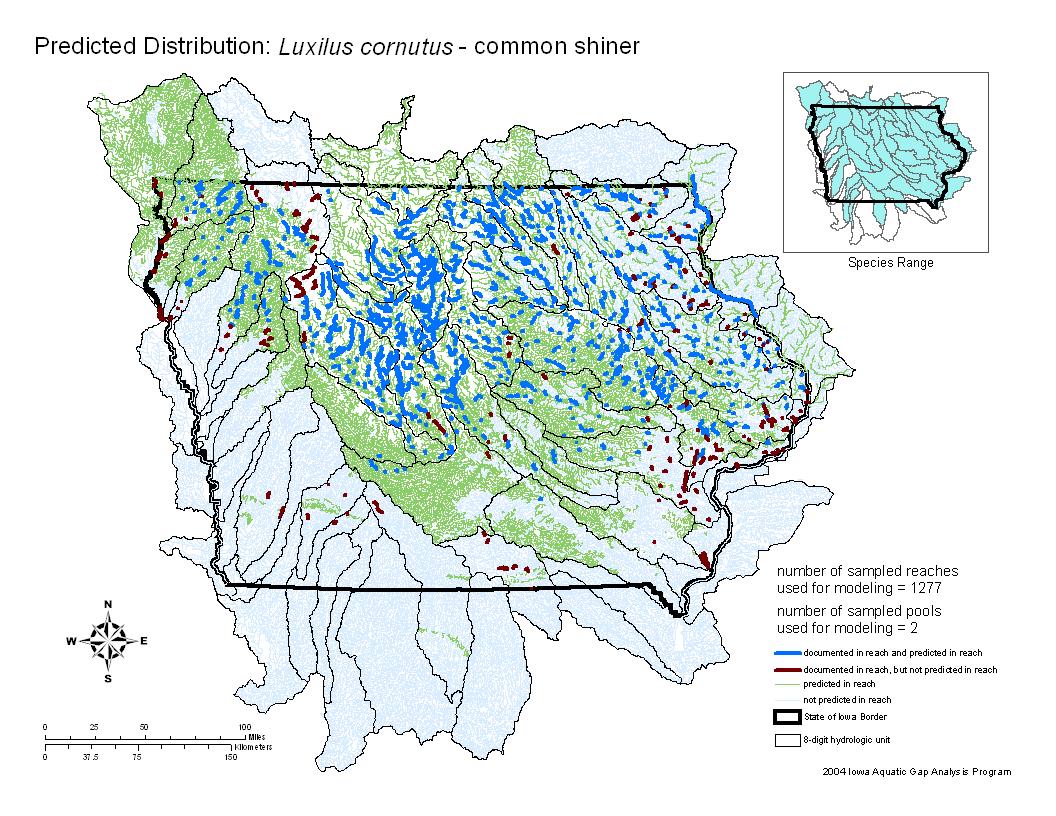
Widely distributed throughout Iowa with the exception of southwest Iowa. It is most abundant in the large interior river and natural lakes, where it is found in most fish collections. It has been documented in upper pools of the Mississippi River, but is absent from the Missouri River.
See our most recent distribution data for this species on the Iowa DNR's Bionet application.
State Record(s)
No state record exists for this species
Submit your potential recordMaster Angler Catches
No Master Angler catches currently exist for this species.
Submit your Master Angler catchFish Surveys
Tip: Click Species Length by Site, then use the dropdown to filter by fish species of interest.Where this Fish Is Found
Bear Creek
Bloody Run Creek
Bohemian Creek
Brush Creek
Brush Creek
Coon Creek
Joy Springs
Lake Cornelia
Little Sioux River (Correctionville to Missouri R)
Little Turkey River
Maquoketa River (trout portion)
McLoud Run
Mink Creek
Missouri River (Council Bluffs to state line)
Missouri River (Sioux City to Little Sioux)
Otter Creek
Ozark Springs
Paint Creek
Richmond Springs
Sny Magill Creek
South Cedar Creek
Spirit Lake
Spring Creek
Swiss Valley Creek
Tete des Morts River
Trout Run
Twin Bridges
Upper Swiss Valley Creek
Volga River
Wapsi River (Trout Section)
Yellow River (Trout Section)